
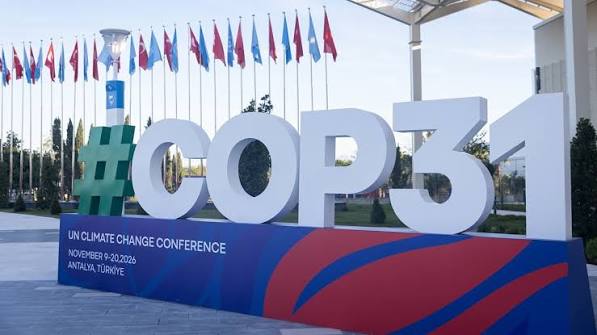
As global leaders gather in Antalya, Türkiye, for the 31st United Nations Climate Change Conference (COP31), the conversation is increasingly shifting from climate commitments to the practical actions, investments and partnerships needed to deliver meaningful change.
Under an implementation-focused agenda, COP31 is placing emphasis on accelerating the energy transition, strengthening climate resilience, mobilising climate finance, promoting sustainable cities and advancing circular economy solutions. Among the notable developments is the launch of the Antalya Compact for Energy-Efficient Buildings, which seeks to drive a 25% reduction in the operational energy intensity of the global building stock by 2035, alongside greater electrification.
Discussions are also highlighting zero-waste initiatives, methane reduction and sustainable cooling as important areas for near-term climate action.
For Africa, these developments carry particular significance. Despite the continent’s considerable renewable energy potential, access to affordable climate finance, energy infrastructure and appropriate technologies remains a major barrier to accelerating sustainable development.
The challenge is therefore not simply to adopt global climate ambitions, but to translate them into practical solutions that reflect Africa’s economic realities, development priorities and institutional capacities. Climate finance must become more accessible and affordable, while investments in renewable energy, sustainable infrastructure, climate-smart agriculture and resource efficiency must support inclusive economic growth.
From a sustainability perspective, COP31 also reinforces the growing responsibility of the private sector in driving climate action. Businesses must increasingly integrate environmental, social and governance considerations into their strategies, strengthen sustainability reporting and accountability, manage climate-related risks and identify opportunities for more efficient and responsible operations. The transition to a sustainable economy requires collaboration between governments, businesses, financial institutions and civil society, supported by credible information, effective governance and measurable performance.
The challenge is therefore not simply to adopt global climate ambitions, but to translate them into practical solutions that reflect Africa’s economic realities, development priorities and institutional capacities.