

News

COP31: Businesses, governments, investors, cities and initiatives rally behind electrification

Today UN Climate Change, Climate Champions and Action Agenda Axis 1 partners launched the COP31 Electrification Delivery Package, which sets out new actions and updates which have been profiled or announced at COP31.

ANTALYA, Türkiye, 19 November 2026: The COP31 Global Climate Action Agenda Electrification Delivery Package – bringing together billions in clean energy investment plans, stronger grids, expanding electricity access and progress in electrifying transport and industry – was presented to Parties today in support of the global opportunity of an electrified economy.

In a formal first for a UN Climate Summit that has put real economy action at the heart of the conference, the Package sets out new actions and updates profiled or announced at COP31, involving over 150 countries plus the European Union, 37 cities and more than 260 businesses across six continents.


Read More:

COP31: Businesses, governments, investors, cities and initiatives rally behind electrification

ANTALYA, Türkiye, 19 November 2026: The COP31 Global Climate Action Agenda Electrification Delivery Package – bringing together billions in clean energy investment plans, stronger grids, expanding electricity access and progress in electrifying transport and industry – was presented to Parties today in support of the global opportunity of an electrified economy. In a formal first for a UN Climate Summit that has put real economy action at the heart of the conference, the Package sets out new actions and updates profiled or announced at COP31, involving over 150 countries plus the European Union, 37 cities and more than 260 businesses across six continents. Investment: At COP31, AIB announced that it is doubling its 2030 green and transition lending target from €30 billion to €60 billion, building on €28 billion already deployed since 2019. Octopus Energy launched an Asia Electrification Fund at COP31 aiming to raise $600 million for solar, wind, storage and electric vehicle (EV) charging projects, already backed by $50m from Japanese investors. And BBVA announced at COP31 that it has channeled nearly €60 billion in sustainable business activity linked to electrification from January 2025 to September 2026.
Read More:

How impacts on people and inequalities can affect businesses and investors

Andrea Saldarriaga, Technical Director at TISFD, explains why TISFD is examining how inequalities can affect societal, economic and financial systems, the four-stage pathway at the heart of its new discussion paper and how the research will inform the future development of the TISFD Framework.

Read More:

TNFD responds to IFRS Sustainability Disclosure Practice Statement 1 Nature-related Disclosures

TNFD welcomes the ISSB Exposure Draft of an IFRS Sustainability Practice Statement on nature-related disclosures. This builds on the existing IFRS S1 Standard and the TNFD framework. IFRS S1 already requires disclosure of material information on nature-related risks and opportunities. The draft Practice Statement is further recognition of the financial materiality of nature-related risks and opportunities to business and finance.

The TNFD believes that the ISSB’s standard-setting work on nature-related risks and opportunities is a critical step for shifting the mindset across business and finance about the resilience of their business and its dependence on the resilience on nature. Building on the work of the TNFD, the ISSB’s efforts will be a key source of market-based standards for governments to convert into regulatory requirements in line with their commitment to Target 15 of the Kunming-Montreal Global Biodiversity Framework (GBF) by the end of 2030.

Read More:

TNFD responds to IFRS Sustainability Disclosure Practice Statement 1 Nature-related Disclosures

TNFD welcomes the ISSB Exposure Draft of an IFRS Sustainability Practice Statement on nature-related disclosures. This builds on the existing IFRS S1 Standard and the TNFD framework. IFRS S1 already requires disclosure of material information on nature-related risks and opportunities. The draft Practice Statement is further recognition of the financial materiality of nature-related risks and opportunities to business and finance. The TNFD believes that the ISSB’s standard-setting work on nature-related risks and opportunities is a critical step for shifting the mindset across business and finance about the resilience of their business and its dependence on the resilience on nature. Building on the work of the TNFD, the ISSB’s efforts will be a key source of market-based standards for governments to convert into regulatory requirements in line with their commitment to Target 15 of the Kunming-Montreal Global Biodiversity Framework (GBF) by the end of 2030.

Read More:

AI growth drives sustainability shift in Asia Pacific data centres

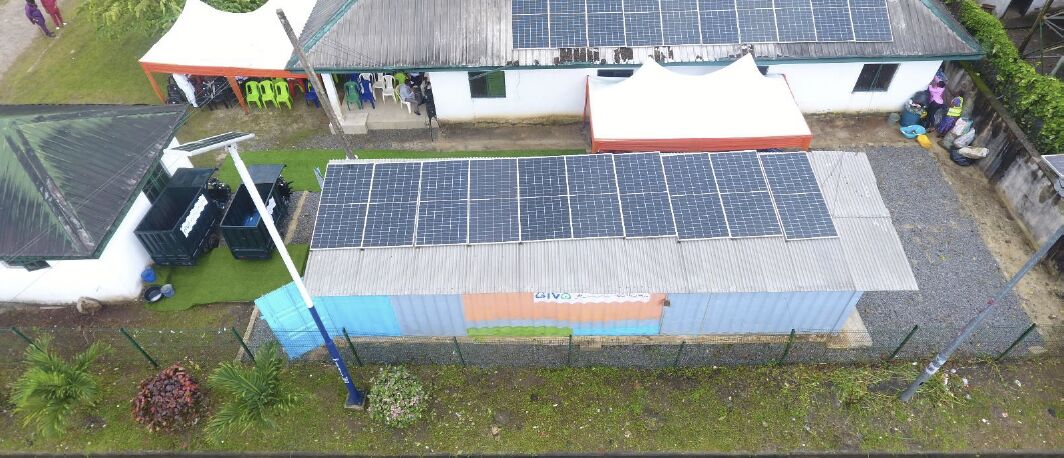
A solar-powered recycling centre opened this week in Onne town, Rivers State (Nigeria), when West Africa Container Terminal (WACT), part of the APM Terminals group, and climate-tech firm GIVO (Garbage In, Value Out) commissioned a community hub designed to process local plastic waste, create livelihoods and operate on renewable energy. The facility, described by GIVO’s chief executive as capable of handling roughly 300 kilograms daily, about 90 metric tonnes a year, is projected to prevent an estimated 2,000 tonnes of CO₂ emissions annually while supporting around 15 direct and 50 indirect jobs in the host community.

Read More:

The climate fight depends on getting the numbers right on emissions

Policymakers depend on accurate greenhouse gas data to design effective regulations, channel public investment, and measure national progress. Companies rely on the same data to shape strategy, manage risk and prove credibility to investors and customers. For both sides, emissions reporting is the foundation of decision-making.

Read More:

New recycling centre in Nigeria targets 90 tonnes of waste annually and 2,000 tonnes CO₂ savings

A solar-powered recycling centre opened this week in Onne town, Rivers State (Nigeria), when West Africa Container Terminal (WACT), part of the APM Terminals group, and climate-tech firm GIVO (Garbage In, Value Out) commissioned a community hub designed to process local plastic waste, create livelihoods and operate on renewable energy. The facility, described by GIVO’s chief executive as capable of handling roughly 300 kilograms daily, about 90 metric tonnes a year, is projected to prevent an estimated 2,000 tonnes of CO₂ emissions annually while supporting around 15 direct and 50 indirect jobs in the host community.

Read More:

Candidate Registration Form

The Institute for Sustainability Africa (INŚAF) is committed to protecting and respecting your privacy, and we will only use your personal information to administer your FSA Essential Program account and candidature as an accredited FSA Education Provider, and the Cyber and Data Protection Act [12:07] Zimbabwe.

Course Booking Form

The Institute for Sustainability Africa (INŚAF) is committed to protecting and respecting your privacy, and we will only use your personal information to administer your FSA Essential Program account and candidature as an accredited FSA Education Provider, and the Cyber and Data Protection Act [12:07] Zimbabwe.